Wild places · 7 min read
Searching for elephants in Udawalawe
A good safari is measured in patience, not sightings per hour.
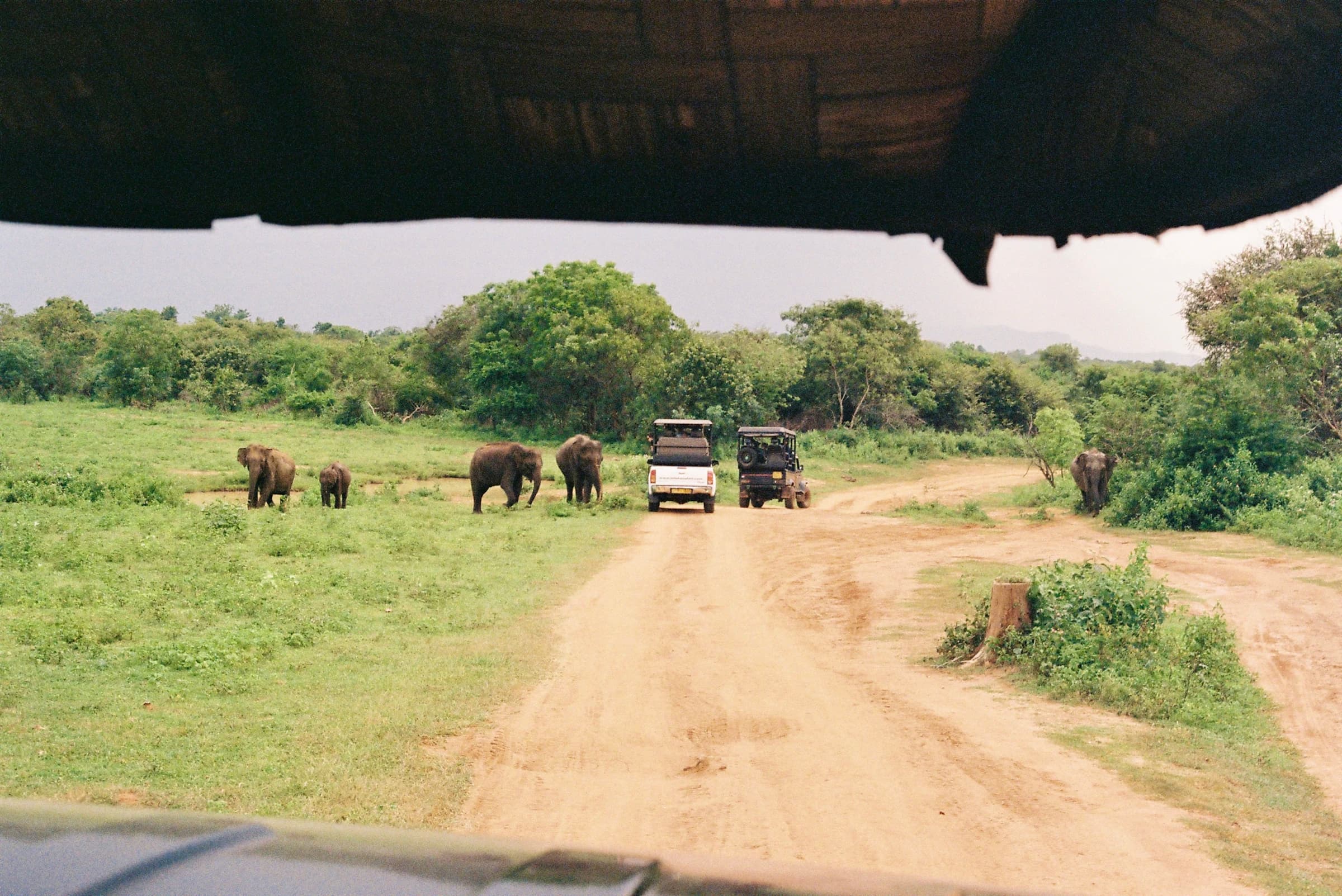
The engine goes quiet near the reservoir. Somewhere in the grass, an elephant tears a branch with a sound like cloth ripping.
Udawalawe’s open landscape makes elephants easier to see, but closeness should never be the goal. A considerate driver reads the animal first and positions the vehicle second.
Stay with one herd. Watch how calves disappear between legs and how the matriarch decides when the whole family moves on.
Why Udawalawe is so good for elephants
Udawalawe National Park surrounds a large reservoir, and its open grassland and scrub make elephants easy to watch at a respectful distance. Herds are seen on most safaris throughout the year, along with water buffalo, crocodiles, eagles and many smaller birds.
Next to the park, the Elephant Transit Home cares for orphaned calves before releasing them back into the wild. Visitors watch scheduled feedings from a viewing platform, without touching the animals.
Udawalawe, Yala or Minneriya?
Udawalawe is best for elephants. Yala is the place for leopards, with a busier jeep track, and is usually partly closed for a few weeks around September. Minneriya and Kaudulla in the Cultural Triangle host the famous gathering of elephants around the reservoirs in the dry months, roughly July to October.
We choose the park by your travel month, your route and what you most want to see, rather than adding every safari to one trip.
Morning or afternoon safari?
Jeep safaris usually last around three to four hours. Early mornings are cooler with softer light; late afternoons are often excellent for elephants heading to water. Both work well, so we choose around your driving day.
Ethical wildlife watching
We avoid elephant rides and shows, ask jeep drivers to keep their distance and switch off engines when animals are close, and never encourage feeding. A quieter, slower safari almost always produces better encounters.
Next story